Showing posts with label anti-oxidant. Show all posts

Tuesday, December 22, 2015

Purple Sweet Potatoes

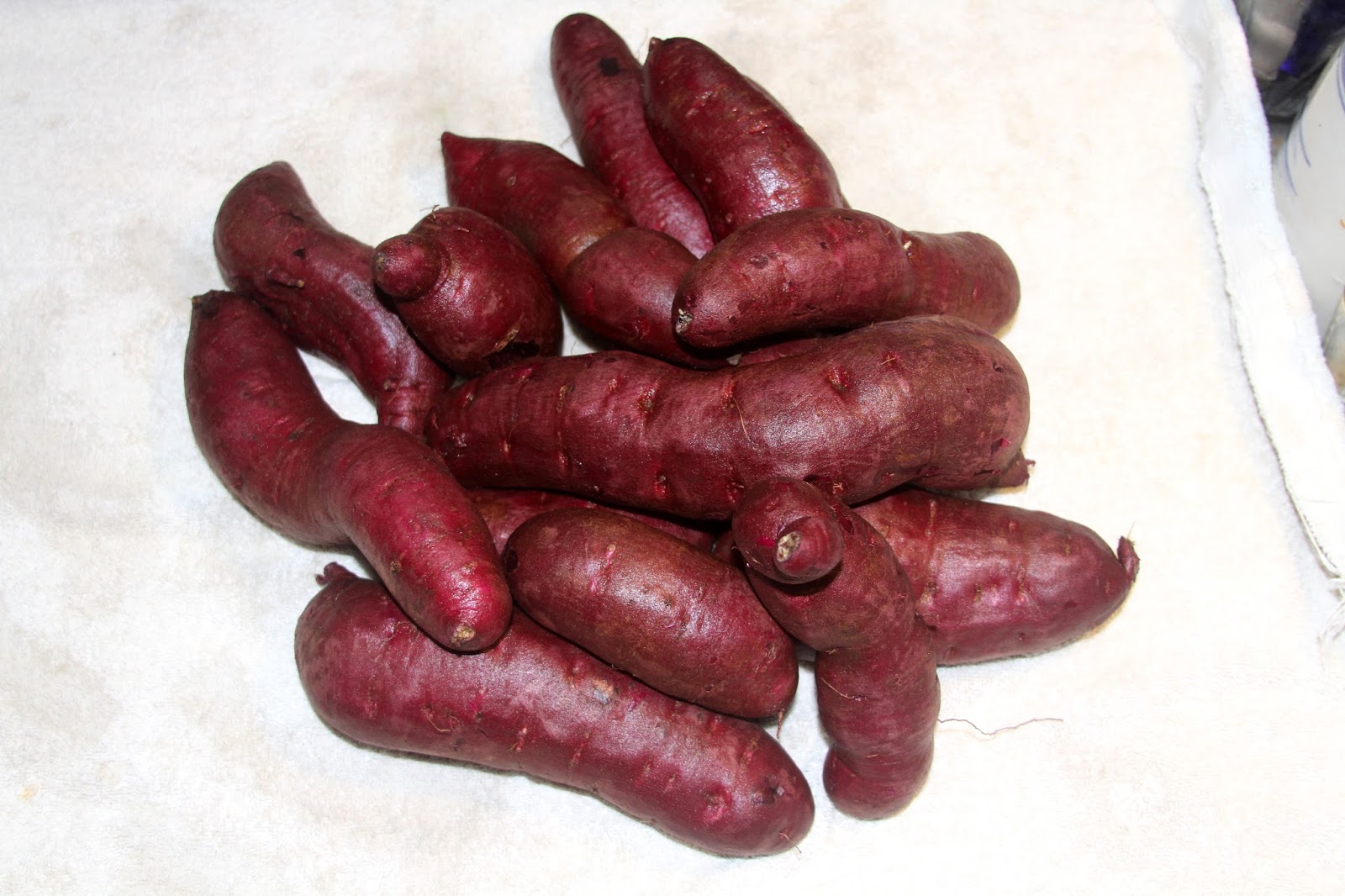
The winter solstice for us is the beginning point of our year so this year our celebration included buying a 40 pound case of organic purple sweet potatoes. We spent the rainy day pressure cooking and bagging them for freezing. For those of you who might be interested in our process, we’ve posted a few pictures.
We like the flavor of these much better than the orange flesh varieties, and there's a big nutrition bonus in this variety, they are very high in cancer fighting antioxidants. Almost anytime you see this beautiful dark purple color in a vegetable or fruit such as beets, red cabbage, blueberries, concord grapes, goji berries, blackberries, etc., it means it’s loaded with antioxidants.
40 pound case of organic purple sweet potatoes.

Potatoes before washing: notice the produce code starts with the number 9 meaning these are organically grown.

After washing in a 10% salt water solution and scrubbing the skin with a brush, then rinsing afterward. Salt water removes any pesticide residue and kills other organic toxins like E. coli and salmonella.

We cut the potatoes in half, then quarters, then cube for pressure cooking.

Cubes ready to cook.

Into the pressure cooker with 1 cup of water, cook at high pressure for 6 minutes, quick pressure release.

Drain the potatoes retaining the wonderful tasting, antioxidant rich "pot liquor" to drink later. We let the potatoes cool in a pan, then spoon into freezer storage bags, about 2 cups per bag. We plan to eat one bag of these between us every two days.

Solstice project complete. Two months worth of purple sweet potato superfood bound for the freezer.

This is our reward: Gorgeous deep purple sweet potatoes with a drizzle of maple syrup, home made pumpkin pie spice, and pecan pieces sprinkled on top, yum!

Wednesday, December 11, 2013

Creamy Cilantro Cashew Dressing

We've been experimenting with a creamy cilantro dressing recipe ever since we tasted the wonderful green dressing they serve at our local vegan restaurant, the fabulous Shine Cafe.  It's been a fun and tasty challenge and though we've never really duplicated the dressing they serve, we've come up with a recipe that's pretty tasty.

This has cashews in it (plus you can add avocado if you want) so it's really satisfying and we use it on salads, over veggies (almost like gravy) and when it's thicker we dip raw veggies and toasted whole wheat pita triangles into it. We love it and we hope you'll like it too.


Creamy Cilantro Cashew Dressing

Ingredients:

1 bunch of cilantro, roughly chopped
2 handfuls raw cashews (2 oz. total)
2 fresh peeled garlic cloves, or 4 cloves roasted garlic
1 package (12 ounces) shelf stable soft silken tofu (we like non-GMO Mori-Nu)
3 Tbsp. apple cider vinegar
2 Tbsp. fresh lime or lemon juice (lime's better for this but you can substitute lemon)
1 to 1-1/2 tsp. salt (optional, to taste)
1/2 tsp. dry mustard
1/8 tsp. white pepper
1/4-1/2 cup water

Directions:
Puree all ingredients in a blender or food processor until smooth.  Taste and adjust seasonings if necessary. Adjust the amount of water you add to get the consistency you want (more water for salad dressing, less water for a dip).

Makes about a quart depending on how much water you add.

Variations (try adding one or more of these):

1 peeled deseeded avocado
1 small jalapeƱo pepper deseeded, inside ribs removed
1/4-1/2 tsp. chipotle pepper in adobo sauce (rinsed)
1/2-1 tsp. dried chipotle pepper powder before blending.
If you're into really spicy, by all means add more chipotle pepper.

Saturday, January 12, 2013

Preserving Kiwi Fruit

Nutritionally Kiwi is truly super fruit. It's high in powerful antioxidants important in both the first and second lines of cellar defense. They prevent damage to DNA and are also valuable for DNA repair and restoration.

Kiwi is also a good source of Dietary Fiber, Vitamin E (Alpha Tocopherol), Potassium and Copper, and a very good source of Vitamin C and Vitamin K.  It is one of the few plants that have an Amino Acid Score of over 100 which indicates it has a complete array of high-quality essential amino acids.

After finding out all this great information about Kiwi fruit we decided to make it a regular part of our diet.

If you haven't yet, go visit the Nutrition Facts website to view hundreds of short videos and read articles by Dr. Michael Greger MD about the latest nutrition research.  Here's a sample of what they have to offer about Kiwi fruit.

We came across a good supply of Kiwi fruit from a local grower who was willing to sell us misshapen and slightly overripe fruit for a great discount.  Kiwi fruit grows on the Central California coast between late November and early April so we want to put aside enough to last through the year.  Since Kiwi is a high acid fruit it can be canned using a boiling water bath so you don't need a pressure canner to preserve it.  We decided not to add any kind of sweetener, preferring to add it later if we want so our recipe here is just pure Kiwi fruit.

Start by splitting the fruit in half from pole to pole:
Make a quick slice to disconnect the white portion of the flesh from the top and bottom poles:
Finish splitting the fruit and have the pile of split Kiwi ready to scoop into a bowl:

Use a spoon to scoop the flesh out into a bowl, discarding the fuzzy skin:

Once the fruit is in the bowl, add some to a blender and blend briefly to chop it up, or mash it in a bowl with a potato masher if you prefer:

Add the chopped fruit to clean, warm 1/2 pint jars leaving 1/4-inch space between the fruit and the top rim of the jar:

Wipe each rim with a clean dry cloth, add a new clean canning lid and secure with a metal band, hand tightened:
We used our pressure canner for the boiling water bath method, removing the rubber overpressure plug and pressure regulator.  You can also use a large, sturdy pot with a lid and a rack to put in the bottom to keep the jars from contacting the bottom of the pot.  Add enough water to fill the cooker halfway, then heat the water to 140 degrees F.  Add the jars to the bath using a jar lifter, then add more boiling water if needed to ensure you have at least 1-inch of water covering the jars.  We had a lot of half pint jars which we stacked 2 jars high:
Put the lid on, turn the heat to high and when the water comes to a vigorous boil, start the timer and turn the heat down about halfway.  We boiled these for 10 minutes.  Turn off the heat, remove the lid carefully so you don't get burned by the steam and let the contents settle down for 5 minutes.  Take the jar lifter and put the hot jars on a dry towel in a place with no drafts to allow them to cool for 12 hours or more.  You'll hear a satisfying 'ping!' sound when each jar seals.  The Kiwi should last up to a year.  We write the date and contents on the jar lid.

Tuesday, January 8, 2013

Broccoli, Leek and Acorn Squash Bisque


We've been getting into Broccoli Bisque recipes lately and decided to use some different ingredients we had on hand for this one.  There's a short discussion about the sulfurophane in broccoli which is an anti-oxidant and which is useable either in raw broccoli or in broccoli that has been ground up raw and allowed to sit for 45 minutes before cooking.  The discussion is in our last blog post Broccoli-White Sweet Potato Bisque

This we used leeks and acorn squash with a bit of cayenne pepper and roasted pumpkin seeds for garnish.

4 cups fresh broccoli florets, chopped in a food processor or blender 45 minutes before cooking
4 leeks light green and white parts washed well and chopped
1-1/2 tsp. dried dill weed
4 cups vegetable broth
4 cups cooked, mashed acorn squash
1 Tbsp. Dijon mustard
2-1/2 cups plain soy or rice milk
2 dashes white pepper
1/8 tsp. cayenne pepper (or to taste)
Salt, to taste
2 Tbsp. tamari roasted pepitas (pumpkin seeds), optional
1 tsp. chia seeds, optional

Add the broccoli, leeks, vegetable broth and dill weed to a soup pot.  Bring to a boil, cover and simmer on medium heat for about 15 minutes, or until the broccoli and leeks are cooked.  Use a hand held blender to make a smooth consistency, then add acorn squash and heat through.  Add mustard, soy milk cayenne pepper and pepper and salt to taste, stir and allow to heat for a minute or so.  Ladle into bowls, sprinkle with pepitas and/or chia seed (if desired) and serve.